

WE NEED TO TALK ABOUT AI
A SYMPOSIUM HOSTED BY ISTITUTO MARANGONI LONDON
15.45 - 18.30, Tuesday 21st April 2026
We Need to Talk About AI brought together leading researchers to examine the complex realities behind today’s most influential technologies. Far from the hype and inevitability narratives that increasingly dominate public discourse, this symposium offered critical, multidisciplinary perspectives on how AI is being developed, deployed, and governed—why, for whom, and what this might mean. Through rigorous, evidence‑based insights, and forward‑looking discussion, speakers explored the societal, ethical, economic, and cultural implications of AI, asking questions about what actually constitutes intelligence.
SYMPOSIUM RECORDING
PANEL
Moderated by Rafael El Baz
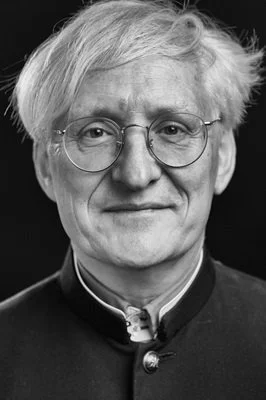

Steven Pemberton - There Is No I In Ai
There's no intelligence in current AI systems, but apparently we think there is, and then get surprised when it gives ridiculous answers. Why is this, and what are the chances that we get real intelligent systems?
There are some who think that should super intelligence arrive, it will take over. What are possible scenarios, and how would they be able to achieve that?
This talk gives an introduction to AI as we currently know it, examines how we interact with it, and envisions the consequences of real AI emerging.
Bio
Steven Pemberton is a distinguished researcher in the fields of interaction, declarative programming, and web technologies, based at the Dutch national research centre CWI in Amsterdam. His university tutor was Dick Grimsdale, who built the world's first transistorised computer, and who was himself a tutee of Alan Turing, 'the father of AI'. After university, Pemberton -- coincidentally -- worked in Turing's old department on the 5th computer in the line of computers Turing had worked on.
He co-designed the language that Python is based on, was the first user of the open internet in Europe in 1988, and has been involved with the web from its inception, co-designing several web standards, including HTML, CSS, XHTML, XForms, and RDFa. In 2022 he received the ACM SIGCHI Lifetime Practice Award, and in 2023 was named an ACM Distinguished Speaker.
Ola Gwozdz - Cultural Innovation: The Art of Intelligent Restraint
As technological acceleration reshapes society, innovation is too often reduced to tools and systems. Through her compelling storytelling and experience, Dr Ola Gwozdz argues that innovation in the age of AI must be understood as a cultural transformation, grounded in people, not technology. Drawing on her experience as an award-winning researcher and innovation leader, she challenges the dominant narrative by asserting that “companies don’t innovate, people do.”
Introducing the concept of Cultural Innovation, Dr Gwozdz presents a next-level model rooted in diversity, multidisciplinarity, and systemic inclusion. Informed by her work at the intersection of AI, inclusivity, and sustainable development, she advocates for a science-based, purpose-driven, and measurable approach to innovation that moves beyond siloed and hierarchical thinking toward relational co-creation.
Situating AI within wider social theory, the talk explores the growing desynchronisation between technological speed and cultural, ethical, and democratic life. While AI enables automation at scale, it can reproduce embedded inequalities and contribute to ecological, political, and psychological crises. Dr Gwozdz concludes with a call to align AI systems with diversity and sustainability goals, reframing innovation as a human-centred cultural practice essential for shaping more just and resilient futures.
Bio
Dr Ola Gwozdz is a social scientist and organisational management expert working at the intersection of technological, social and sustainable innovation in an era of accelerated change and polycrisis.
An award-winning researcher and international speaker, she is often described as a “data philosopher,” combining technological insight with cultural and organisational transformation. She is certified by the British Computer Society in building ethical AI. In 2023, she was appointed a Delegate to the UN Commission on the Status of Women (CSW68) with UN Women UK, followed by becoming Lead of a global Digital Women Programme, an initiative advancing diversity in engineering and data science. Her work challenges monocultures in technology and advocates systemic approaches to inclusion. As she writes in The Mindset Paper (2024): “Inclusivity isn’t just about evening the numbers but reshaping cultures, forming new identities and changing behaviours systemically and strategically.”
Archana Prasad - Beyond Bias and Initiative
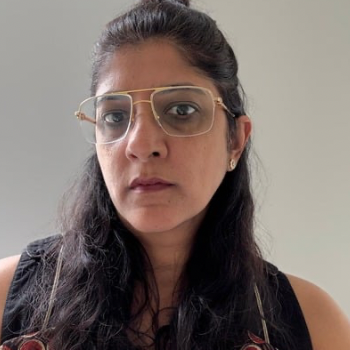
Through Beyond Bias and initiative, supported by the Goethe-Insitut and Mozilla Data Collective, Archana Prasad brings together artists, technologists, and cultural practitioners to rethink how generative AI is shaped by intentional datasets. The project builds participatory AI pipelines where communities help define how their images, aesthetics, and cultural knowledge are represented, licensed, and governed.
Bio
Archana Prasad is a creative technologist, researcher, and entrepreneur working at the intersection of AI, culture, and society. She is Founder and Chief Creative Officer of Gooey.AI, a low-code platform used by over a 1.5 million builders to deploy generative AI workflows for global impact. Her work brings together artistic practice, technological experimentation, and participatory research to explore how emerging AI systems can better reflect cultural diversity and collective knowledge.
Archana is currently a PhD researcher at the Royal College of Art, where her research investigates inclusive AI pipelines grounded in cultural heritage, including textile traditions and literary archives. She previously founded Jaaga.in and BeFantastic.in, platforms that have supported interdisciplinary experimentation across art, technology, and civic innovation.
Her work asks a central question: how can artistic methods shape the design of technologies that meaningfully serve society.
Colum Finnegan - Degenerative AI: Creative Processes and the Human Edge
Human thinking is imperfect, lossy, messy and social, radically unlike the processes carried out by LLMs and the neural networks that underpin them. Yet what are flaws for an LLM are precisely where our human uniqueness lies. From science to fashion from business to ethics, innovation emerges from our socially enmeshed, biologically channelled and imperfect ways of thinking.
This talk examines how over-reliance on AI tools may ultimately flatten the space of possibilities opened up by these unique capacities.
Bio
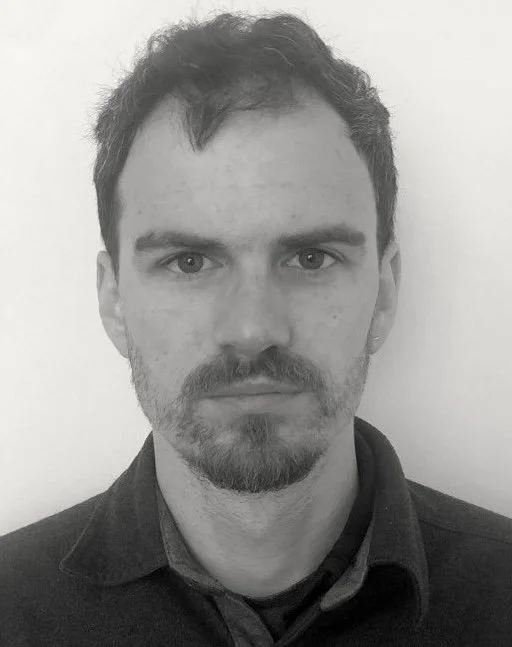
Dr Colum Finnegan is a philosopher of cognitive science and technology specialising in the intersections of human mind formation, epistemic security, and global catastrophic risk.
Based at the Centre for the Study of Existential Risk, University of Cambridge, his research investigates how the architectural and incentive structures of modern technologies, from social media to Large Language Models (LLMs), shape human cognition and social evolution. His work applies an interdisciplinary approach aimed at understanding and fostering the cognitive and ethical flexibility required for humanity to navigate 21st-century existential threats.